
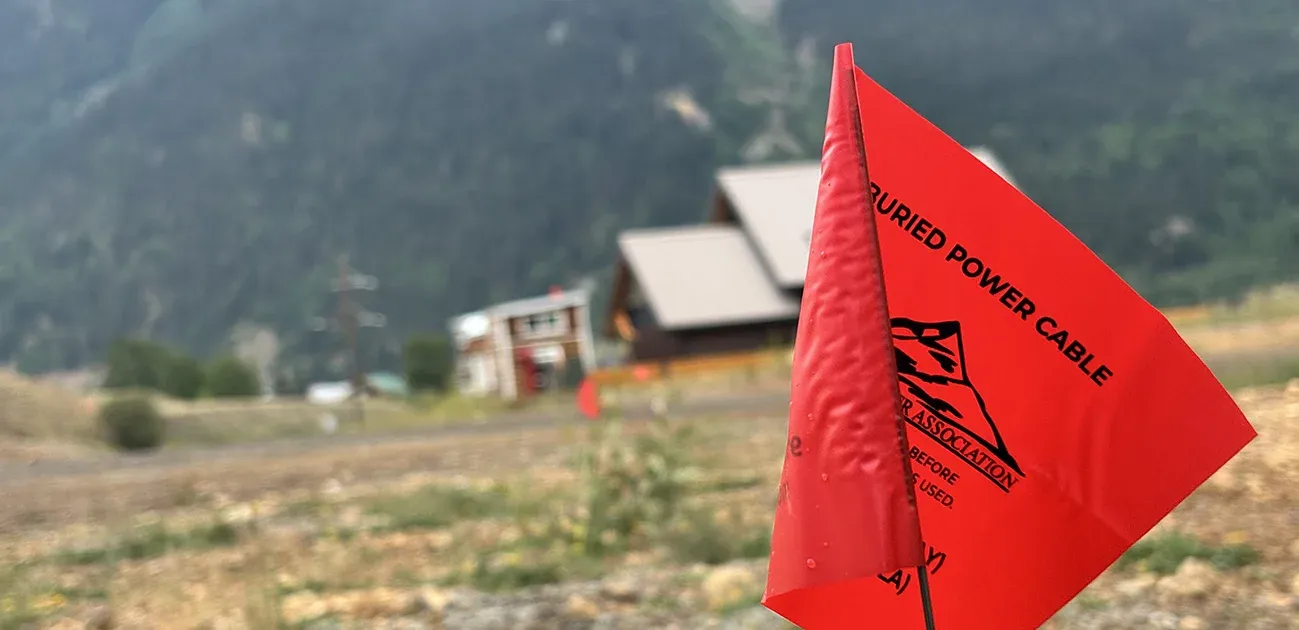
On a warm spring Saturday, the urge to dig can strike suddenly. Maybe it’s a long-delayed fence project, a new tree for the backyard, or finally putting in those garden beds. You grab a pick or shovel and start digging. Then you hit something unexpected — a water line, fiber internet conduit, or even a gas or power line.
What felt like a simple weekend project is now a costly emergency.
April is Safe Digging Month, and Colorado’s electric cooperatives are using the occasion to remind members of a simple step that can prevent outages, injuries, and expensive repair bills: Always call 811 before you dig.
It’s free, easy, and required by law for most excavation activities. Yet every year, underground utility lines are damaged across Colorado because someone skipped that call. And as winter ends and landscaping and construction begin, spring is the season when underground utilities are most frequently damaged — often by a property owner digging by hand.
“Professional excavators are very familiar with the 811 system and use it to complete residential and commercial work safely,” said Tommy Novotny of Novo Utility Services, which handles underground utility locating for three electric co-ops in southwestern Colorado. “Yet each spring, we continue to see avoidable utility strikes, many caused by routine homeowner activities such as fencing, repairing runoff or erosion issues, planting trees, or starting new gardens.”
“Typically, your water, sewer, and electric would not be affected by hand digging, but that’s not always the case,” said Tug Birk, underground locate coordinator for Glenwood Springs-based Holy Cross Energy. “And telecoms infrastructure — such as fiber internet, cable, and phone — is often not buried very deep.”
WHAT HAPPENS WHEN YOU CALL 811?
State law requires you to contact 811 at least two full business days before a digging project. When you call 811 or visit Colorado811.org to make the request, you indicate where and when you plan to dig. That information is routed to utilities that may have underground infrastructure in the area. Utilities send a professional to mark the approximate locations of buried lines with color-coded spray paint or flags. You can track your request at Colorado811.org, but should wait three full days after your request to ensure all lines have been marked.
THE CONSEQUENCES OF SKIPPING THE CALL
Damaging underground utility infrastructure can have immediate and far-reaching consequences. At a minimum, it can disrupt service to your own home. More often, it affects neighbors as well, knocking out electricity, water, or internet service across an entire area.
There are also financial consequences. In one case reported by a Colorado electric cooperative, a member who damaged an underground electric line was responsible for approximately $7,000 in repair costs. In other cases, the repair bills have been higher.
“It can be very, very expensive to repair the damage from a dig-in,” said Kasey Pfeil, operations administrative assistant for Brighton-based United Power. Pfeil coordinates the co-op’s utility locates and works closely with 811, members, and contractors. “It is much more expensive than the property owner thinks it will be.”
Safety risks are even more serious. Striking an energized electric line can cause severe injury or death. Hitting a gas line can result in explosions or fires. Knocking out communications lines can disrupt nearby businesses and hamper emergency response services.
RISKS ARE GROWING
The risk of accidental utility damage is growing, as the number of underground utilities has never been higher. Cooperatives and other types of electric utilities are increasingly installing lines underground to improve reliability, reduce exposure to severe weather, and as a wildfire mitigation strategy.
At the same time, fiber-optic internet service is expanding rapidly, particularly in rural areas. These broadband lines can make the underground environment more crowded and complex.
“Someone who is getting ready to put some new fence posts in the ground may have called 811 before, and nothing was found near where they plan to work,” said Andy Carter, member engagement manager for Cortez-based Empire Electric Association. “But new utilities might have gone in since then, especially internet conduit, which tends to be near the surface.”
“Another misconception is that every underground utility gets marked,” Carter said. “The 811 system only marks underground lines up to the meter or the edge of the public right-of-way.”
And the types of underground lines that a utility locates after an 811 call may vary. “Holy Cross Energy, for example, does not locate secondary service lines at all, except in the public right-of-way as required by state statute,” said Birk. “Homeowners should err on the side of caution and reach out to the utility provider or call a private locator if they are unsure of what has been located within their work area.”
To get a full picture of underground utilities that could be damaged by digging, property owners often need to hire a private utility locator.
WHY PEOPLE DON’T CALL — AND WHY THAT’S A PROBLEM
Despite the risks, some property owners and builders still skip calling 811. Or they feel pressed for time and don’t want to wait for three days after their call to 811. Others assume a small project doesn’t justify the effort — or they simply don’t realize how shallow utilities may be buried.
“I definitely understand the perspective of people who are busy,” said Birk from Holy Cross. “To dig safely, you have to plan ahead. If you want to dig on Saturday, make that call on Tuesday or Wednesday.”
Colorado’s electric cooperatives work year-round to educate their members about safe digging, and co-ops are especially active in the early spring before warm weather sounds the starting gun for landscaping and construction work. Co-ops use newsletters, bill inserts, social media posts, and community events to reinforce the message: Call 811 before you dig.
CO-OPS HAVE TO LOCATE TOO
Electric cooperatives also rely on accurate locating for many of their own operations. Before replacing poles or installing new underground conductors, crews must locate existing infrastructure to protect workers and avoid service disruptions.
Specialized contractors such as Novo Utility Services and ELM Utility Services perform underground utility locating on behalf of electric co-ops and other utilities. Using a combination of electromagnetic detection, ground-penetrating radar, GPS mapping, and digital records, these firms help utilities respond quickly and accurately to 811 requests.
Advances in mapping and data-sharing technology have made the process faster and more precise, benefiting utilities, property owners, and contractors.
SPRING IS 811 SEASON
Spring is a time for renewal and for landscaping and outdoor projects. Colorado’s electric co-ops encourage members to enjoy the season — and to plan ahead for safe digging.
A quick call to 811 before digging can prevent outages, injuries, and expensive repairs.
“Whether you’re landscaping, planting trees, or putting up a fence, call 811,” Birk said. “Make that phone call.”
Originally published in Colorado Country Life magazine, April 2026.
Jim Hight is a writer, research analyst, and consultant based in Buena Vista where he is a grateful member of Sangre de Cristo Electric Association.
Photo courtesy of Novo Utility Services